motion branding

Brand consistency doesn't end with a static logo. We create the rules, templates, and tools that bring order to animation across your entire company, no matter who is preparing the next set of assets. You invest in polished branding, a brand book, typography, and a color palette. Then, your brand starts to move, and suddenly every animation on social media, your website, or digital signage screens looks different.

What is motion branding?


Motion branding is the translation of a brand's personality into a cohesive language of movement. It defines how visual identity elements behave: the pace at which they appear, how they react, how they transition between scenes, and how they establish a hierarchy of information.


At elomate, we turn these rules into a complete Motion Design System. It helps you eliminate inconsistency, speed up production, and create communication that your audience will recognize even without a visible logo.


Your brand starts to move the way it sounds, looks, and acts.

Why does your brand need a Motion Design System?

One brand. One language of motion.

Whether an animation is created by an in-house team, an agency, or a freelancer, every project retains the brand's character. A Motion Design System sets a clear direction and limits arbitrary design decisions.

Faster and more efficient production

Ready-to-use templates, modules, and presets allow you to create new materials without designing motion from scratch. Your team can prepare campaigns and digital content more efficiently, shortening time-to-market without sacrificing consistency.

Clearer communication

Well-designed animation guides the viewer's eye and presents information in the right order. Motion isn't just decoration—it helps the audience grasp your key message faster.

Greater brand recognition

Distinctive pacing, rhythm, and transitions can become just as important to your identity as color, typography, or framing. They help your brand stand out and remain consistent at every touchpoint.

No items found.

No items found.

How we build a Motion Design System. Step by step.

We will guide you through the entire process—from auditing your existing assets to delivering ready-to-use tools that your team will rely on every day.

analiza i audyt obecnych animacji

Zaczynamy od sprawdzenia, jak Twoja marka porusza się dzisiaj. Analizujemy materiały wykorzystywane w social mediach, kampaniach, na stronach internetowych, w aplikacjach i na ekranach DOOH i Digital Signage. Oceniamy ich spójność, czytelność, dynamikę oraz dopasowanie do formatów i kanałów komunikacji. Wskazujemy elementy, które działają, miejsca wymagające poprawy oraz obszary, w których animacja traci charakter marki.

kierunek i zakres motion design systemu

Wyznaczamy wspólne zasady dla wszystkich najważniejszych formatów. Wybieramy elementy graficzne, typograficzne i komunikacyjne, które powinny zostać ustandaryzowane. Określamy hierarchię wizualną, sposób prowadzenia uwagi oraz rolę ruchu w różnych punktach styku z odbiorcą. Podczas warsztatów i konsultacji wspólnie ustalamy zakres systemu, jego zastosowania oraz potrzeby zespołu.

zasady ruchu i kluczowe przykłady

Projektujemy charakterystyczny styl ruchu wynikający z osobowości i strategii Twojej marki. Definiujemy między innymi: tempo i rytm animacji, sposób animacji logo oraz zasady jego wykorzystania w różnych formatach, sposób pojawiania się i znikania elementów, zasady easingów i czas reakcji, zachowanie typografii, ikon i ilustracji, system przejść między scenami oraz hierarchię informacji w ruchu. Zaprojektowane zasady testujemy na kluczowych layoutach. Dzięki temu jeszcze przed wdrożeniem widzisz, jak Motion Design System działa w praktyce.

szablony animacji

Zamieniamy strategię i zasady w praktyczne narzędzia. Tworzymy elastyczne szablony, które pozwalają szybko podmieniać teksty, zdjęcia, kolory i materiały wideo bez projektowania każdej animacji od początku. Dbamy o przejrzystą strukturę plików i intuicyjną obsługę, aby system mógł być wykorzystywany zarówno przez doświadczonych motion designerów, jak i mniej technicznych członków zespołu.

Expand your Motion Design System with dedicated tools

Depending on the scale of your brand and your team's workflow, we can extend the core system with additional modules.

Motion System Guideline – your digital motion manual

We create interactive, web-based documentation. It includes live animation previews, physics principles, examples of correct application, and common pitfalls to avoid.

It serves as a single source of truth for internal teams, agencies, and external creators.

Custom presets and plugins

We design custom presets and tools that allow you to apply your brand’s signature motion to any element with a single click. We automate repetitive tasks, reduce the risk of errors, and further accelerate your daily production.

Let’s organize your brand’s motion


Your brand already has a look and a voice. It’s time to give it a signature way of moving. Book a free consultation. We’ll review your current assets, identify key areas of inconsistency, and show you how a Motion Design System can streamline your team’s workflow and boost communication efficiency.

Book a meeting →

FAQ

motion branding
#2 wyróżnia markę w natłoku reklam
Dynamiczne, kreatywne animacje przyciągają wzrok i zapadają w pamięć. Dzięki nim Twoje kampanie lepiej przebijają się przez konkurencyjne komunikaty.
#3 skraca proces decyzji i przyspiesz sprzedaż
Zamiast godzinnych prezentacji – kilkadziesiąt sekund animacji, by pokazać kluczowe korzyści. Klienci szybciej rozumieją wartość Twojej oferty, co przekłada się na sprawniejszą finalizację umów.
#4 utrzymuje uwagę widza na dłużej
Krótka i dynamiczna animacja szczególnie dobrze sprawdza się w social mediach oraz kampaniach marketingowych, zwiększając zaangażowanie i szanse na interakcję z marką.
To tylko część zalet animacji.
Chcesz dowiedzieć się więcej? Umów się na darmową konsultację – pokażemy ci jak animacja może pomóc osiągnąć cele Twojej marce.
Darmowa konsultacja

artykuły na naszym blogu

Przeczytasz w 5 min.
Karol Dynysiuk

What is Motion Branding in the era of ubiquitous screens?


For many years, animation was treated primarily as an aesthetic add-on. It was meant to grab attention for a moment and then disappear among dozens of other messages. Today, with brands present on screens almost everywhere—from billboards and menu boards to websites and smartphones—that approach is no longer enough.


Motion Branding changes the way we think about animation. It stops being an add-on and becomes a full-fledged element of a brand's visual identity—just as important as the logo, typography, layout, or colors. Motion begins to build brand recognition rather than just enhancing individual assets.


For this to work, animation shouldn't be created by chance or depend on the style of a specific motion designer. It should stem from the brand's character. That is why a Motion Design System is created—a set of rules that define how a brand moves on screen. The speed of animation, the smoothness of transitions, the dynamics, and the way elements react are all designed to reflect the brand's personality. A stable financial brand will move differently than a modern retail brand that wants to be associated with energy and speed.


The lack of such a system means that every subsequent animation looks a bit different. As a result, communication becomes inconsistent, and the brand loses its recognizability. The audience may not notice this consciously, but subconsciously, they perceive the brand as less professional and less consistent.


That is why Motion Branding is not about creating individual animations. It is about designing a consistent language of motion that can be used across all materials—from social media and websites to advertising campaigns and Digital Signage screens. Thanks to this, every new animation strengthens the brand instead of building it from scratch.


An elomate fun fact: A well-designed motion branding system allows audiences to start identifying a brand just by the way elements move on screen, even before they see the logo or signature colors.


Market diagnosis: The "Every agency, different animation" syndrome


Most large brands operate across many channels simultaneously. Communication reaches Digital Signage screens, DOOH media, social media, television, and apps. An internal team cannot handle this alone, so production is outsourced to various agencies and studios. And this is where one of the biggest problems in modern branding arises: the "every agency, different animation" syndrome.


If a brand lacks its own Motion Design System, every agency creates animations in its own way. A brand book defines logos, colors, and typography, but it rarely says anything about motion. It doesn't define animation pacing, how elements appear, or the nature of transitions. As a result, every project is created according to the animator's individual style.


The consequences are quickly apparent. In one campaign, a product appears calmly and elegantly. In the next, it flies onto the screen dynamically, and in the following one, it barely moves at all. Each animation might look good on its own, but together they no longer form a single brand. Instead of building recognition, they send conflicting signals to the audience.


This problem is particularly visible in retail and Digital Signage, where the viewer has only a few seconds to notice a message. In such cases, animation cannot just be eye-catching; it must guide the eye and present information in the right order. If every agency uses different pacing, different highlights, and different effects, the screen becomes chaotic. The customer sees movement, but fails to remember what matters most.


Elomate insight: In retail spaces, a first impression is formed within seconds. Chaotic movement and inconsistent animations make it difficult to process a message and can simultaneously affect the perception of a brand's quality and its products. Even if the viewer cannot pinpoint why, they subconsciously perceive the brand as less organized and less professional.


The lack of a common language for motion also means higher costs. Every new campaign starts practically from scratch. There are more revisions, longer discussions about the direction of the animation, and it is harder to maintain consistency between materials prepared by different teams.


The solution is to create a Motion Design System—a set of rules that define how a brand behaves in motion. Thanks to this, regardless of whether an animation is prepared by an internal team, a freelancer, or an external agency, the end result always looks like one consistently managed brand.


The mathematics and physics of motion as brand DNA


A well-designed visual identity system leaves no room for chance. It is not based on vague guidelines like "use a modern font" or "a nice shade of blue," but on concrete parameters: HEX, RGB, and CMYK codes, typography rules, or logo clear space. A Motion Design System applies this same logic to the world of animation. Instead of describing movement with words like "dynamic" or "calm," it defines it using precise parameters of time, speed, and animation characteristics.


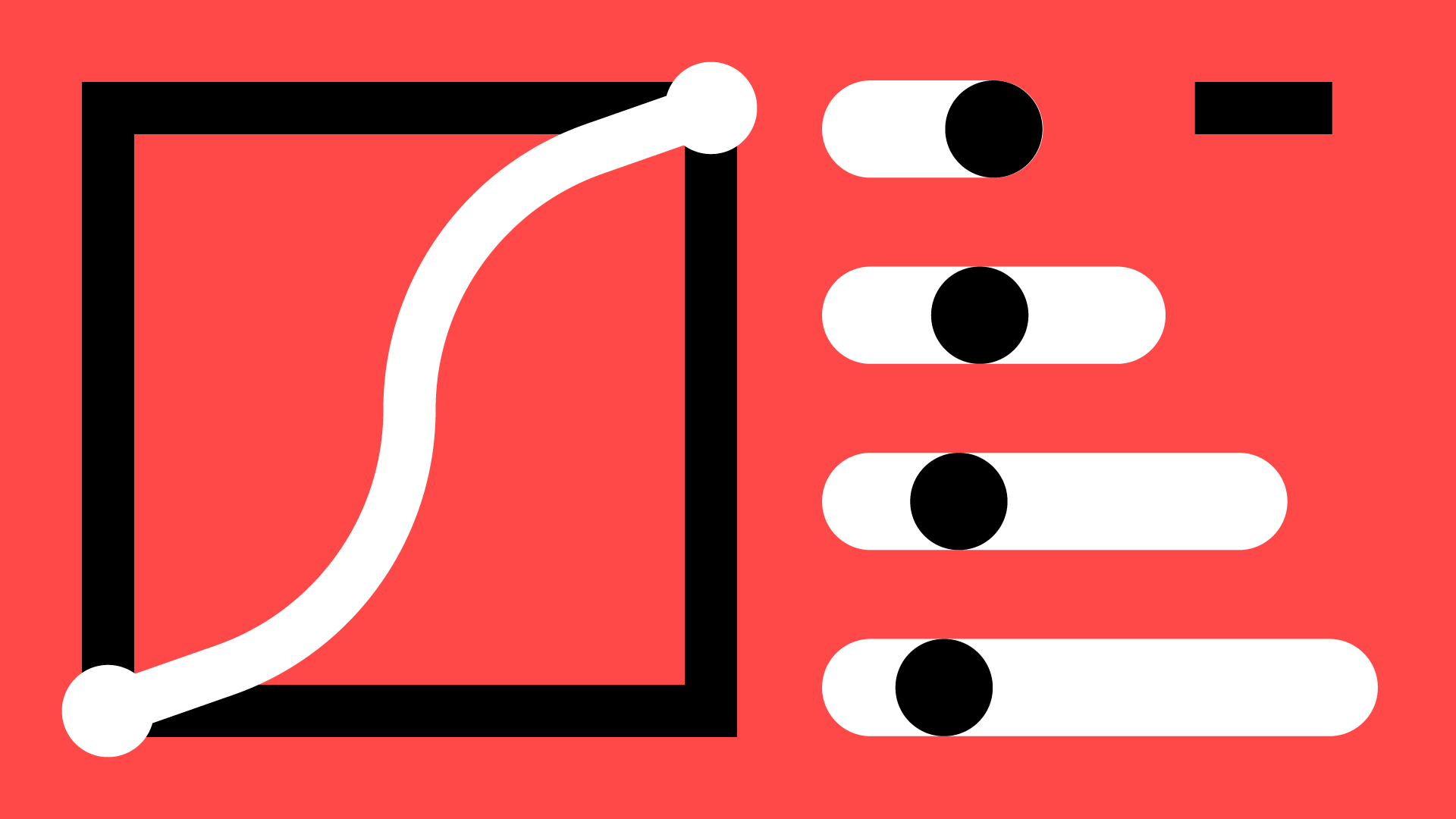
A key element of such a system is Bézier curves, known in motion design as easing. These are what determine how an object accelerates, decelerates, and comes to a stop in its final position. Properly designed curves allow you to give an animation a sense of weight, elasticity, or inertia. In practice, this means that the movement itself begins to communicate the brand's character.


A brand targeting a younger audience might use more dynamic curves with an overshoot effect, where the element slightly exceeds its final position before smoothly settling back. This movement feels energetic and responsive. Conversely, brands in the financial, medical, or insurance sectors typically use gentler ease-in and ease-out curves, which build a sense of stability, control, and trust. It is a matter of consciously designing how the brand is perceived.


The second pillar of a Motion Design System is timing—the duration of individual animations. A professional system does not assume that every animation is designed from scratch; instead, it creates a closed set of values for specific use cases. Micro-interactions, icon appearances, header entrances, and product showcases all have predefined time intervals. This ensures that all materials maintain the same rhythm and pace, regardless of whether they are created in-house or by various external contractors.


This approach eliminates randomness. An animator doesn't have to wonder whether an animation should last 0.4 or 0.8 seconds. The system defines how long a quick reaction, a standard transition, or the exposure of key elements should take. This is precisely how a brand maintains consistency across a website, app, social media, advertising campaigns, or Digital Signage screens.


A Motion Design System is therefore a collection of measurable parameters, not just a set of best practices. Just as a brand book defines colors and typography, a motion system defines the physics of animation. This allows the brand's character to be consistently reproduced regardless of the tool, team, or communication channel.


An elomate fun fact: Easing parameters can be transferred between different technologies. The same cubic-bezier curve values used in After Effects can be implemented in CSS or JavaScript, ensuring the brand maintains an identical movement character in promotional videos, on websites, and in mobile apps.


Information hierarchy: how to guide the viewer's eye


Every second counts on screen. Whether we are talking about Digital Signage, DOOH advertising, or a short social media animation, the viewer only gives the message a fleeting moment. Therefore, effective animation is not about showing off software capabilities or a motion designer's skills. Its purpose is to guide the viewer's eye exactly where we want it to go.


One of the most common mistakes is trying to highlight everything at once. The logo spins, the product jumps onto the screen, the title pulses, and icons and text are animated as well. Every element competes for attention, and in the end, none of them win. From a perceptual standpoint, humans cannot consciously track several equally strong stimuli at the same time. The result is chaos and a significantly less effective message.


Not every element should be animated in the same way. Mandatory information, such as legal disclaimers or fine print, serves a different function than a price or a product. Its job is to be visible without distracting from the main message. That is why it usually appears only through subtle animation, without any additional movement.


A professional Motion Design System splits attention management into two stages. The first is scene building, which involves defining the order in which elements appear. The viewer first learns the context, then sees the product, and only at the end encounters the most important information, such as the price or a key benefit. This ensures the message is received in the exact order it was designed.


The second stage is the accent system. Once all elements are on screen, motion begins to indicate priorities. The most important element receives a distinctive animation style—this could be a gentle scale, a subtle squash and stretch effect, or another movement defined in the Motion Design System. It is crucial that such an accent is always applied in the same way. Over time, it becomes part of the brand's recognizable motion language.


Information hierarchy is particularly critical in very short formats. If an ad lasts only 10 seconds, there is no room to animate everything. The less time the viewer has, the fewer elements should compete for their attention. In practice, this often means consciously choosing not to animate headlines or decorative elements so that all the energy of the motion is focused on the single most important message.


This is precisely why a good Motion Design System does not just define how elements move. It also specifies what can be highlighted, when it should appear, and in what order the viewer should see specific information. As a result, every animation not only looks consistent but, more importantly, communicates what matters most to the brand more effectively.


Anatomy of a motion design system (part 1) - Audit and foundations


A good Motion Design System does not start with designing animations. It begins with an analysis of what the brand is already showing on screens. Before new rules are created, one must understand where problems arise and what causes a lack of consistency.


The first stage is an audit of all video materials. Animations used across various channels are analyzed, from TV spots and DOOH ads to digital signage, websites, and social media. The goal is not just to judge whether a given animation is "pretty." It is about finding recurring patterns that hinder the building of consistent brand communication.


During such audits, it quickly becomes clear that most problems do not concern the animation itself, but a lack of shared rules. Recurring elements have different shapes and behave differently in every campaign. Products appear on screen in a different order. Buttons, icons, and informational elements change their position and animation style depending on the creator. Each piece of content may look fine on its own, but together they do not form a single system. The audit also covers technical issues. Among other things, material lengths, frame rates (FPS), and file formats are checked.


After gathering all observations, the construction of the Motion Design System's foundations begins. Instead of treating every animation as a separate project, we start looking at all materials as parts of a single system. This is the moment when components requiring standardization are defined.


It most often includes:

  • animation intro style,
  • single and group product animations,
  • price presentation system,
  • headline and text behavior,
  • legal disclaimer appearance,
  • icon and UI element animations,
  • transitions between scenes and entire assets.


This ensures that each of these elements has its own clearly defined rules. Regardless of who is preparing the next campaign, all materials use the same solutions and maintain a consistent character.


This is the stage where the brand regains control over its communication. Instead of wondering how a given element should behave every time, the team receives a ready-made set of rules. Only on such a foundation can more advanced elements of a Motion Design System be built, such as motion physics, animation libraries, or production automation tools.


An elomate fun fact: In our experience, most animation consistency issues do not stem from the animators' skills. The problem is usually a lack of clear guidelines. When an animator receives only a static design without rules regarding sequence, pacing, and animation style, they have to make their own decisions. The more people working on brand materials, the greater the risk that each of them will interpret movement differently.


Anatomy of a motion design system (part 2) - Design and implementation


Once the audit is complete and the rules are defined, the motion design system begins to take real shape. This is the stage of designing the motion style and testing it on the brand's most important assets. Instead of creating individual animations, we develop master layouts that define how all elements move.


At this stage, specific motion parameters are defined—animation tempo, rhythm, easing, the order in which elements appear, and how key information is highlighted. A transition system is designed to connect subsequent scenes or assets into a cohesive whole.


Once the motion style is approved, the implementation phase begins. Production templates are created, serving as the foundation for all future deliverables. Instead of starting every animation from a blank composition, designers work within a pre-established system. These templates are highly organized; all compositions, layers, and controllers follow a consistent structure and naming convention, allowing any team member to navigate the project quickly. This streamlines the workflow and significantly reduces production errors.


Expressions—scripts that control animation behavior—play a key role here. Rather than manually setting keyframes for every new project, the core motion principles are embedded directly into the template. These control properties such as position, scale, opacity, and delays between elements, ensuring that every new animation automatically maintains the same character.


In practice, the animator no longer needs to edit Bezier curves or delve into the project structure. They simply swap out content, product images, prices, or colors, and the system itself ensures the correct rhythm, tempo, and physics are maintained. This approach completely transforms the production process. Instead of spending hours preparing each new animation from scratch, the team works with a ready-made system. Production becomes faster, more predictable, and far less prone to errors. Most importantly, every new animation remains fully compliant with the motion design system, regardless of who is working on it.


Motion branding ceases to be just a set of guidelines and becomes a practical production tool. The principles previously documented now function directly within the working files, ensuring brand consistency at every stage of asset creation.


Guidelines and dedicated plugins


Even the best-designed motion system will fail if it is difficult to implement. Many brands provide guidelines in the form of extensive PDF files. The problem is that motion is difficult to describe through images and text alone. A PDF cannot convey actual timing, the character of the easing, or how an element behaves during an animation.


This is why a classic brand book is increasingly being supplemented by a motion system guideline—an interactive, browser-based guide. This is the central hub for all the brand's motion principles. It is used by both internal teams and external agencies, ensuring everyone works from the same set of rules.


The greatest advantage of this solution is its interactivity. Instead of reading a description of an animation, a designer can see it in action immediately. They can check the motion tempo, compare different animation variants, or see how a specific component behaves. This significantly reduces the risk of misinterpretation and accelerates the entire team's workflow. A digital guide can contain much more than just animation examples. It can serve as a single source of truth for cubic-bezier values, ready-to-use CSS and JavaScript snippets, icon libraries, sound files, templates, and all the assets needed to create new materials. As a result, every contributor uses the exact same resources and parameters.


The use of dedicated Adobe After Effects plugins and presets takes this even further. Instead of expecting an animator to memorize every rule of the motion design system, you can integrate them directly into the software they use. The designer selects the appropriate animation type from a panel—such as an element entrance, button animation, or stagger sequence—and all parameters are applied automatically. There is no need to manually set easing, animation duration, or delays between elements. All values are consistent with the pre-defined system.


This makes a huge difference in day-to-day work. A new animator no longer needs to spend hours analyzing documentation or recreating motion based on previous projects. They simply use the provided tools, and the motion design system itself ensures the correct animation style is maintained. This solution is particularly valuable for large organizations working with multiple studios and freelancers. The more people creating content for a brand, the higher the risk of losing consistency. Dedicated tools effectively mitigate this problem by moving rules directly from documentation into the production process.


An elomate fun fact: In a well-designed Motion Design System, an animator doesn't have to remember every single value and motion rule. The tools handle the accuracy. A plugin or preset automatically applies the correct easing, timing, or animation sequence, which significantly speeds up onboarding for new team members and drastically reduces the risk of errors.


The business value of a motion design system


For many companies, implementing a motion design system is primarily a business decision. It is not a project aimed solely at improving animation aesthetics. It is an investment designed to streamline the production process, increase communication consistency, and reduce costs associated with creating video content.


The biggest change is visible in the workflow. In a traditional model, every new animation is created practically from scratch. Designers have to determine motion pacing, build animations, and refine details through multiple rounds of revisions every single time. A Motion Design System changes this process. Most decisions have already been made, so new materials are created much faster and are immediately compliant with established standards.


This translates directly into a shorter time from concept to campaign launch. Instead of waiting weeks for new materials to be prepared, many can be created in a few hours or even minutes using ready-made templates and system tools. This is a huge advantage when you need to react quickly to competitor actions, seasonal promotions, or price changes.


A Motion Design System also significantly reduces the number of revisions. Instead of debating how individual elements should move, all parties use the same rules and the same tools. Less time is spent on corrections, and more is dedicated to developing the campaign concept itself.


The benefits are even greater in organizations that work with multiple agencies and freelancers. Every new contractor needs time to understand the brand's character and its communication style. Without a motion design system, this means extra meetings, tests, and endless revisions. When a brand has digital guidelines, ready-made templates, and dedicated tools, the onboarding process for new partners becomes much simpler and faster.


But the benefits don't end there. A motion design system not only streamlines production but also strengthens the brand itself. When the way elements move is consistent across all materials, motion becomes another element of visual identity, alongside the logo, colors, and typography. Over time, audiences begin to recognize the brand not just by how it looks, but also by how it moves. This translates into real business benefits. Each subsequent campaign doesn't build the brand from scratch but reinforces existing associations. The brand becomes more recognizable, communication more consistent, and all marketing activities support one another. In practice, this means that every new piece of content works not only to sell a specific offer but also increases the value of the entire brand. This is why a motion design system should be treated as an investment in long-term brand equity, rather than just a tool for creating animations.


Motion branding is created once and then supports every subsequent campaign. It shortens production time, reduces errors, facilitates collaboration with external partners, and ensures that all materials build a single, consistent brand image.


Elomate fun fact: The greatest savings from implementing a Motion Design System don't come from animating individual projects faster. They primarily stem from reducing the number of revisions, making it easier to adapt assets for different formats, and significantly speeding up the onboarding of new team members and agencies. In the long run, these are the factors that have the biggest impact on return on investment.


When animations create themselves – communication automation


One of the biggest advantages of a Motion Design System is the ability to automate animation production. As long as every animation is created manually, it requires an animator's time—even when only a product name, price, or photo changes. With a large volume of assets, this model quickly becomes inefficient.


The situation changes once motion is defined as a set of specific rules and parameters. The animation is no longer created from scratch every time. Instead, a template is used that preserves the physics of movement, information hierarchy, and brand character, while only the data fed into the system changes.


This solution works perfectly for Digital Signage, retail chains, or the food industry. You simply swap out the product name, price, or photo, and the finished animation is generated automatically. There is no need to involve an animator for every change in the offer, as the Motion Design System ensures that all elements maintain the correct rhythm, timing, and animation style. Automation also opens up new possibilities in marketing activities. By connecting templates to databases or CMS systems, animations can be created in real time. A brand can automatically prepare materials for different locations, languages, or promotions without having to manually edit every single variant.


This approach is also perfect for Real-Time Marketing. Campaigns can react to specific events, weather, or offer changes almost instantly. Instead of waiting days for new materials to be prepared, a finished animation can be generated and published within minutes.


Automation also means fewer errors. Data such as prices, product names, or legal disclaimers are pulled directly from source systems. This reduces the risk of mistakes caused by manual data entry and ensures full consistency across all communication channels. Most importantly, however, automation does not mean a loss of quality. On the contrary. Thanks to the Motion Design System, every generated animation uses the same motion principles, identical timing, and the same information hierarchy. Regardless of whether one asset is created or ten thousand variants, the brand retains its character and remains recognizable in every single one.


This is precisely why a Motion Design System becomes the foundation for scalable communication. It allows you to produce more content, react to changes faster, and simultaneously maintain full control over brand quality and consistency.


Elomate fun fact: When a Motion Design System is connected to a database and a rendering engine, it can automatically generate hundreds of versions of the same animation. Only the data changes—such as prices, products, language, or screen format—while all the motion principles remain identical.


Summary: Motion as the ultimate competitive differentiator


For years, visual identity was based primarily on logos, colors, and typography. Today, that is no longer enough. Brands operate mainly on screens—in social media, apps, websites, digital signage, and DOOH media. In such an environment, it matters more and more not just how a brand looks, but also how it moves.


This is why motion branding is becoming a natural evolution of classic branding. Motion is no longer just an addition to a campaign; it is becoming another element of visual identity. Just as we recognize a brand by its signature color or typeface, we can begin to recognize it by its animation style, rhythm, and characteristic easing.


A motion design system is a set of signature principles that allow the audience to associate with a brand even before they see its logo. Each subsequent animation reinforces the same associations, building recognition in a natural and consistent way. At the same time, the system organizes the entire production process. It connects brand strategy with the daily work of designers, animators, and agencies. It clearly defines motion rules, speeds up production, facilitates collaboration with multiple vendors, and allows for the automation of asset creation. As a result, the brand remains consistent regardless of the number of campaigns, formats, or communication channels.


That is why motion branding is not a passing trend or just another design fad. It is a response to how modern brands communicate with their audiences. The more screens and content surround us, the more important a consistent language of motion becomes.


Brands that start consciously designing their motion DNA today will gain an advantage that goes beyond aesthetics. They will produce materials faster, maintain communication consistency more easily, and build recognition more effectively.


When we think of the world's biggest brands, we can often recognize them by a characteristic sound, color, or logo shape. Increasingly, the way they animate is joining that list. A well-designed motion design system makes movement another element of visual identity—one that works subconsciously and strengthens brand recognition with every new campaign.

false
zacznij projekt
Poruszymy Twój brand. Dosłownie.

Dobry motion design zaczyna się od prostej rozmowy dwóch stron, które wiedzą, czego chcą. Daj znać, co planujesz, a sprawdzimy, jak zamienić statyczny przekaz w dynamikę, która przyciąga wzrok i zostaje w głowie odbiorcy.

Thank you for your message! We'll get back to you soon.
Oops! Something went wrong with the message. Try it once.

expand_less