2D or 3D animation? How to choose the right technique
Spis treści:
2D and 3D are not in competition
2D and 3D animation do not represent two different levels of quality. They are two tools used to solve different communication challenges. Well-designed 2D can look modern, original, and premium. At the same time, not every 3D animation needs to aim for photorealism. It can be minimalist, illustrative, abstract, or intentionally exaggerated. Therefore, the choice of technique alone does not determine the quality of the result. The concept, visual direction, storytelling, production quality, and alignment with the brand and publication platform are far more important. That is why we don't start by asking which technique is better. We start with what the audience needs to see, understand, or feel.
When should you choose 2D animation?
2D animation offers great freedom in simplifying information and building a unique visual language. It is particularly effective when the subject of communication is not a specific physical product, but rather a service, process, function, idea, or a customer pain point. Through illustrations, typography, symbols, and metaphors, you can depict things that would be difficult to capture with a camera or represent realistically. This makes complex digital products, business processes, or abstract services easier to grasp. This is one of the reasons why 2D animation is frequently used in explainer videos, B2B materials, educational content, social campaigns, and SaaS product presentations. It allows you to organize your message and guide the viewer through information in the right order. 2D is also worth considering when a brand has a distinct visual identity or its own illustrative style. Branding elements can be expanded into a full animated world while maintaining characteristic colors, shapes, typography, and tone of voice. This doesn't mean every 2D animation has to be flat, simple, or minimalist. It can be based on characters, elaborate illustrations, dynamic typography, collage, textures, or a combination of several different aesthetics. Its style should stem from the brand's character and the project's objectives. If the goal is to tell a story, simplify a complex message, or create a unique visual language, it is worth exploring the possibilities of professional 2D animation production.
When should you choose 3D animation?
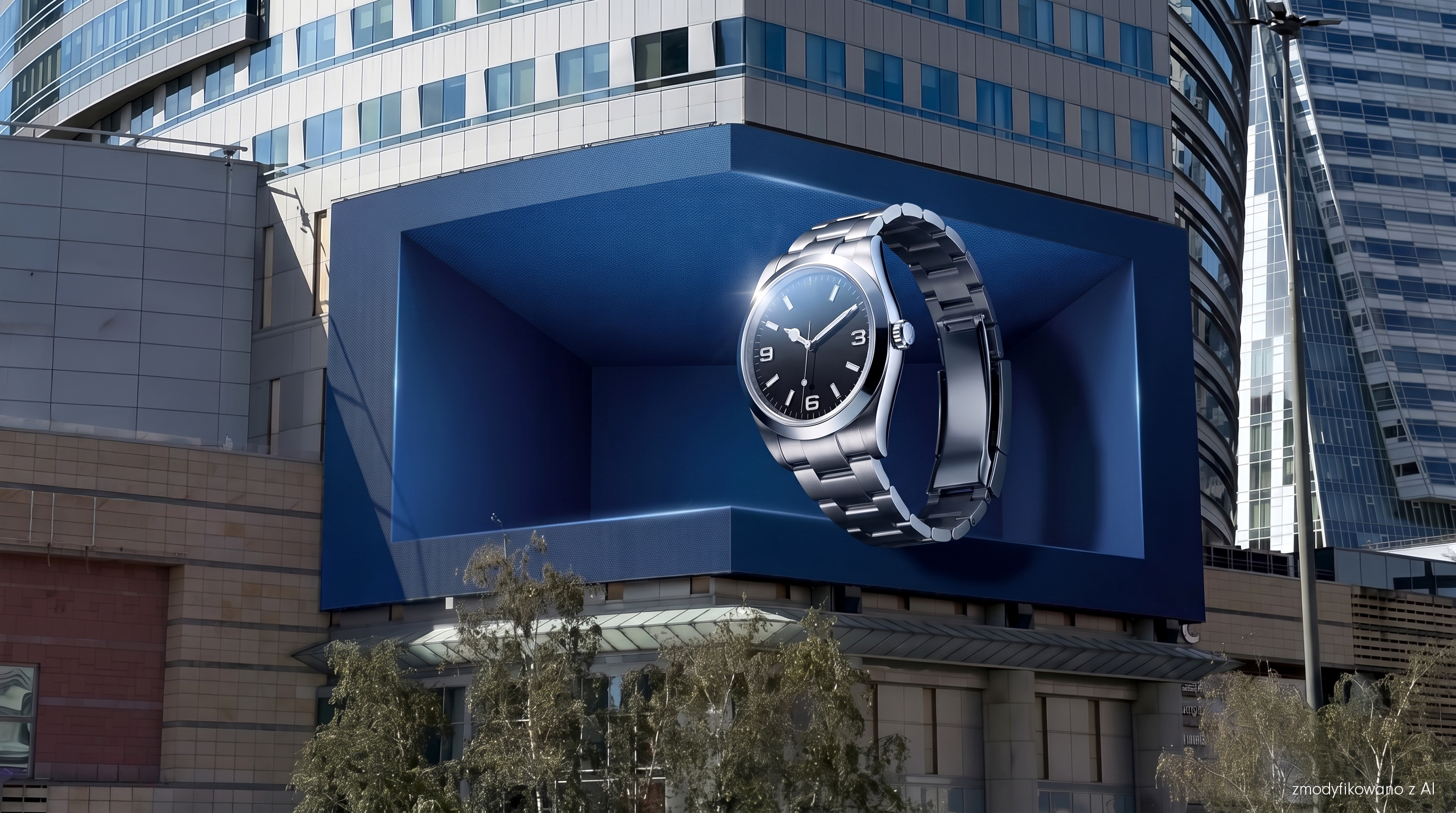
3D animation becomes particularly valuable when the main focus of the communication is a physical product. It allows you to showcase its shape, proportions, surface, material, and functionality. The camera can move around the object, zoom in on details, look inside it, or present elements that would remain invisible in traditional filming. This is a great solution for electronics, cosmetics, packaging, machinery, technical devices, industrial products, and furniture. 3D product animation not only allows you to present the product's appearance but also to explain its construction, properties, and usage. The 3D technique is also useful when the product does not yet physically exist. Based on models, documentation, or designs, you can prepare materials before a prototype is built, production begins, or a market launch occurs. Control over the image also plays a major role. In a 3D environment, we can consciously design the lighting, camera, space, and material behavior. This creates shots that would be difficult, expensive, or impossible to achieve on a real-world set. However, 3D animation doesn't have to be limited to realistic product visualizations. It can be used to create characters, abstract worlds, visual effects, and stylized campaigns. If the communication needs to be based on space, physicality, or spectacular transformation, 3D animation production offers very broad possibilities.
Key differences between 2D and 3D animation
The differences between 2D and 3D animation are best viewed through the lens of the effect we want to achieve. It is not just about the look of the image, but also about the storytelling approach, the role of the product, and the brand's character.
Realism and how the product is shown
2D animation offers the freedom to interpret reality. It can simplify forms, omit unnecessary details, and focus the viewer's attention on the most important information. A product can be depicted symbolically or in a style derived from your brand identity. 3D provides greater control over space, perspective, lighting, and materials. It is more effective when the viewer needs to see the product clearly, understand its construction, or focus on a specific detail. However, this does not mean that 3D must always be realistic. Three-dimensional forms can be stylized to create a world that does not attempt to mimic reality.
Storytelling
2D excels at metaphor. It allows you to transition instantly from a customer's problem to a product solution, then display data, processes, and results. It is not constrained by physics or real-world space, which is why it is often an effective choice for services, digital products, and complex topics. It helps turn abstract concepts into a clear narrative. 3D is particularly powerful when the story centers on an object or space. It can demonstrate how a mechanism works, show processes occurring inside a product, illustrate material changes, or highlight the relationship between individual components.
Style and brand alignment
Both techniques can be deeply integrated into your visual identity. In 2D, the natural starting points are your brand's typography, illustrations, colors, shapes, and graphic elements. These can be used to build a motion language that remains consistent with your other communications. In 3D, branding can be woven into materials, lighting, set design, camera movement, object forms, and animation style. A three-dimensional world does not have to look like a generic product visualization; it can have its own recognizable character. Therefore, choosing between 2D and 3D should not come down to which technique looks better. What matters more is which one will create an image that feels most natural for your brand.
Production complexity
The animation production process varies depending on the technique, but in both cases, the level of complexity can differ significantly. In 2D production, factors such as illustration style, number of scenes, character animation, level of detail, and the number of elements created from scratch all play a role. In 3D, the scope of work is influenced by modeling, material preparation, rigging, animation, simulations, lighting, and rendering. If product models already exist, part of the process may differ from a project where all objects must be created from scratch. For this reason, it is impossible to assess the difficulty of a project based solely on whether it will be executed in 2D or 3D.
Does 3D animation always cost more than 2D?
No. The technique itself does not determine the price of an animation. A simple presentation of an existing 3D model may require less work than an elaborate 2D animation featuring multiple characters, hand-drawn illustrations, and numerous scenes. The reverse is also true—creating a detailed 3D product, realistic materials, and complex simulations can significantly increase the scale of production. Costs are primarily driven by the scope of the material, duration, number of scenes, level of detail, style, motion complexity, number of formats and versions, and the availability of source assets. It is also important to consider what will be needed after the main production is complete. Sometimes a single project must be adapted for multiple channels, languages, aspect ratios, or product variants. It is worth considering this during the conceptual planning phase. Therefore, budgets should not be compared on a "2D animation price vs. 3D animation price" basis. First, you must define exactly what is being created and how the material will be used later.
When should you combine 2D and 3D?
Not every project requires choosing just one technique. Often, the best results come from combining the strengths of 2D and 3D animation. A three-dimensional product can be paired with animated typography, icons, and visual identity elements. This allows the product to retain its physicality while keeping the message clear and consistent with the brand. A 3D character can function within a more graphic 2D environment. Realistic visualization can be complemented by illustrative motion design, and a spatial scene can be adapted to a flat, minimalist brand aesthetic. Combining techniques is particularly useful when the material needs to both showcase a product and explain how it works. In such cases, 3D handles the object, space, and detail, while 2D handles information, data, and narrative flow. It is not worth combining techniques just to make the material look more impressive. Every element should serve a specific function. If a hybrid approach makes the message easier to understand or better reflects the brand's character, there is no reason to limit the project to a single tool.
How to decide between 2D and 3D animation?
A good choice starts with the purpose of the material, not aesthetic preference. First, consider exactly what the viewer needs to see. If understanding a service, process, or abstract idea is the priority, 2D may be the natural direction. If the product's appearance, construction, material, or functionality is key, 3D will likely offer more possibilities. The brand's character is also important. Is its identity based on illustration, typography, and flat forms? Or is it closer to spatial compositions, light, and materiality? The technique should expand upon the existing visual language rather than disconnect the animation from the rest of the communication. You must also consider the distribution channel. A video explaining a product on a website is designed differently than a short social media ad, or an animation for a DOOH screen or Digital Signage. The channel influences the length, pacing, composition, and amount of information the viewer can absorb. Future use of the material also matters. If the animation is to be developed into a series, adapted for multiple formats, or regularly updated, it is worth planning a production system from the start that allows for this. Therefore, the most important questions are not "Do we prefer 2D or 3D?" or "Which technique is trendier right now?". It is better to ask: "What do we want to show?", "What should the viewer understand?", and "What effect should this material achieve?".
2D or 3D animation? Start with the goal
2D and 3D animation offer different possibilities, but neither is inherently better, more professional, or more effective. 2D works well for ideas, processes, services, and metaphor-based communication. 3D helps showcase products, materials, structures, and space. In many projects, the best solution is a conscious combination of both techniques. The final choice should stem from the goal, brand character, storytelling style, and publication platform. The technique is a tool. Its job is to help tell the right story in the best possible way.
If you are not yet sure which direction is right for your project, let's start by talking about what you want to achieve. We will help you choose the technique, style, and scope of production to suit your brand, audience, and budget.