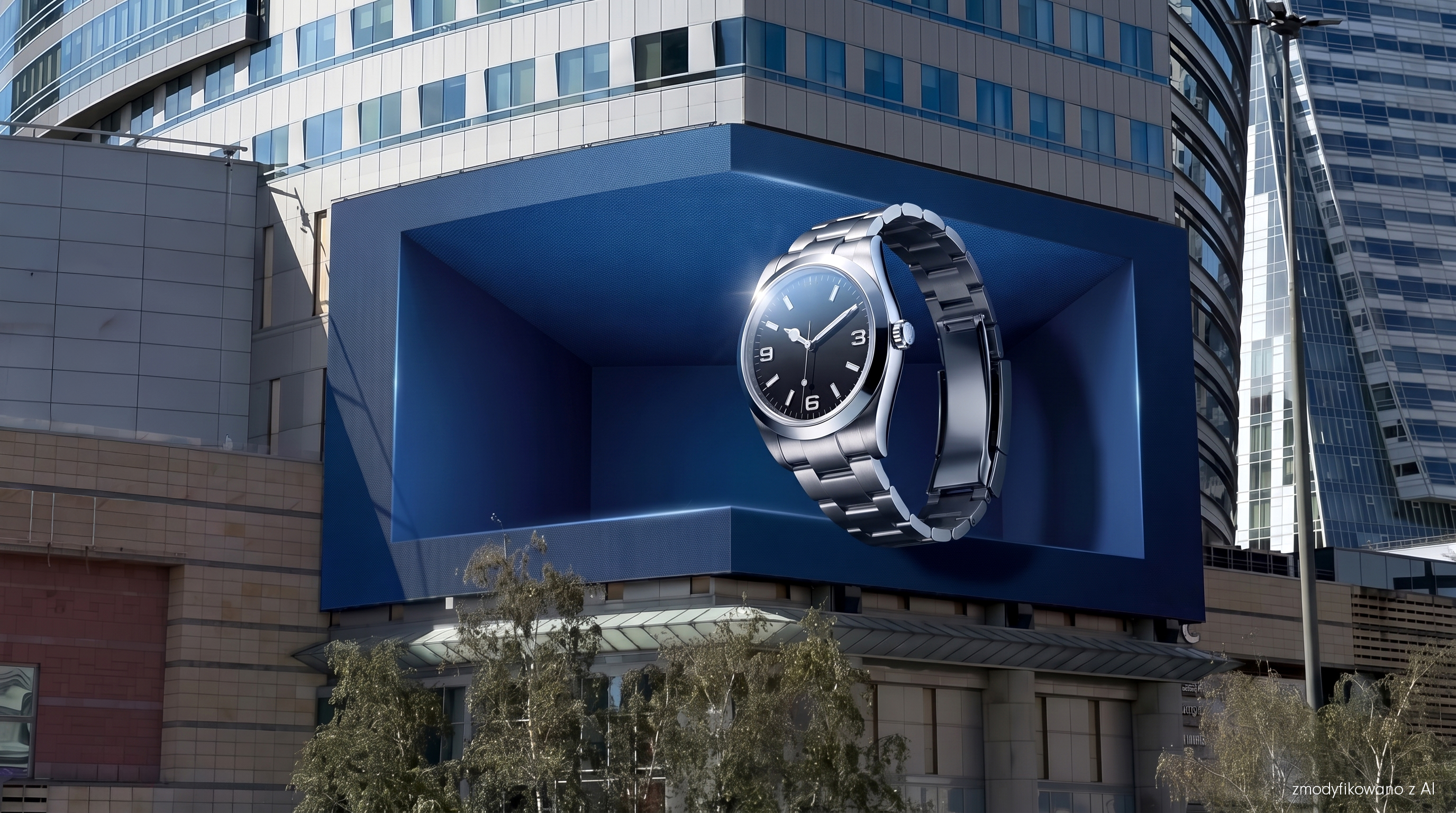
Fake OOH – a new dimension of creative advertising
Spis treści:

A new perspective on advertising space
The marketing industry is constantly looking for ways to stand out from the crowd. With technological advancements and rising audience expectations, simple billboards or classic video spots may no longer be enough. Fake Out Of Home involves enhancing standard video footage with fully digital elements so realistic that the viewer gets the impression that everything actually happened. Imagine a video of a busy city center: pedestrians, cars, the daily hustle and bustle… and suddenly, a monstrous version of your brand's product appears—it looks like it’s physically there, but in reality, it has been carefully integrated into the footage using CGI animation.
Unlike classic OOH (Out of Home), where physical space is filled with advertising media (e.g., billboards, citylights, banners), FOOH exists solely in the virtual realm. There is no need to organize physical installations or obtain permits to place structures on building facades. All the magic happens on a computer and on set, and you can use the results across all channels—from social media and video platforms to television.
How does FOOH advertising work?
The process of executing a FOOH campaign is similar to producing a short film. First, you choose or create a concept—it could be a slightly humorous idea like "brand mascots climbing a famous skyscraper" or a vision of "ice cream balloons landing in the city center." Then, we organize a video shoot at a real location. Once the raw footage is ready, the post-production and 3D animation team steps in to add elements that never existed in reality. Specialists ensure that the proportions, lighting, and even shadows or reflections on surrounding surfaces are accurate, creating an impression of complete realism.
The end result can be stunning. Someone who sees such a video online might believe for a moment that a giant coffee cup was actually placed in the city center. This sparks curiosity, triggers reactions like "Is that even possible?", and encourages people to share the clip with friends. From a marketing perspective, this means massive viral potential.
Why do Fake OOH ads stir up emotions?
The answer is illusion. People naturally wonder: "Am I really seeing something this amazing on the street? How is it possible that I haven't heard about this event?" This thrill of surprise makes people eager to click SHARE and tag their friends, amplifying the ad's reach.
FOOH is a great fit for brands associated with creativity, fun, and the courage to break the mold. It also works well for companies that want to emphasize innovation and the use of modern technology—viewers automatically associate a unique advertisement with a progressive brand approach.
Suggested applications for FOOH
It might seem like a format reserved only for large corporations. However, thanks to the development of 3D animation and post-production software, even smaller companies can afford these types of campaigns. Of course, the budget will vary depending on the level of complexity (whether we use many extras, create complex 3D models, how many specialists need to be involved, etc.).
You can use Fake OOH in:
- Social media — this is the perfect place to trigger a quick "wow" effect. When a clip is short and engaging, it has a high chance of being widely shared.
- Online advertising campaigns display formats or video ads can get a second life if, instead of a standard banner, you display a spectacular, supposedly "real" stunt.
- Television - a surprising TV spot using Fake Out Of Home can strongly capture the attention of viewers accustomed to classic advertising formats.
Is FOOH more expensive than traditional forms of advertising?
There is no simple answer to this question. Everything depends on the concept and the complexity of the animation. With classic outdoor advertising, you have to pay for space rental, the production of physical media, and their installation. FOOH, on the other hand, requires a film crew, a VFX team, and 3D animators, but you can avoid the costs associated with the logistics of physical structures. It is also important that the final video material can be used across various channels, so its potential is much greater and it can pay off faster than a typical installation that only lasts for a specific time on the street.
What determines the costs?
The production price is influenced by the complexity of the animation, the type of scenes (do you need a crowd of extras, a street closure?), the length of the clip, and the level of realism you want to achieve. Sometimes a simpler 3D model and a few-second shot are enough, while other times you need longer footage with an elaborate plot and the involvement of a large team. At elomate we tailor the idea to the client's budget.
Is FOOH the future of advertising?
Looking at the trends, it can be said that Fake Out Of Home is just beginning its career. A brand that arranges a digital event in an urban space in an original way can count on significant interest and increased recognition. In the era of scrolling through social media and low tolerance for repetitive forms of messaging, FOOH provides what audiences expect: a "wow" effect, curiosity, and emotion.
CGI technologies are becoming increasingly accessible, and post-production specialists are outdoing each other with new ideas, which only enhances the creative possibilities. We can expect to see many impressive projects in the coming years that push the boundaries of our imagination.
Fake Out Of Home (FOOH) is a fresh take on advertising that combines real footage with 3D animation, creating the impression that an impressive campaign physically exists in an urban space. It is a great option for companies wanting to stand out from the crowd and trigger an immediate sense of surprise in their audience. There are no limitations here related to real infrastructure or costly logistics - the only limit is your imagination and the budget allocated for creating the ad.
If you are looking for a way to achieve viral reach and grab attention, FOOH could be the key to success. It is a format that makes viewers ask the question: "Did that really happen?" And once they start discussing and sharing the video, your campaign gains much more publicity than can be achieved with classic forms of outdoor advertising. If you want to try this exciting new form of communication and surprise the world, contact us - we will show you how Fake Out Of Home can take your brand to the next level.