How to build a consistent brand motion language across future campaigns?
Spis treści:
The answer doesn't always have to mean creating an extensive Motion Design System right away. Sometimes, a motion language begins to emerge naturally during the first campaign and is then consciously developed in subsequent ones. That was the case with our collaboration with DPD Polska.
Motion can also be an element of brand identity
In traditional branding, it is easy to point out the elements responsible for recognition: color, logo, typography, illustration, and layout. However, in digital communication, there is an additional layer: motion. How quickly information appears, how one element transforms into another, how typography behaves, or how the screen transitions between scenes—all of this influences the perception of the brand.
This is why two animations using the exact same colors and logo can create completely different impressions. One might be calm and precise. Another, energetic and direct. A third, organic, soft, and fluid. If a brand uses animation regularly, these decisions stop being just a matter of a single project. They begin to build its motion language.
The first animation can set the direction for the next ones
Not every brand needs an extensive set of motion guidelines from day one. Sometimes, the starting point is simply a good advertising animation. During its design, we make dozens of decisions anyway:
- how fast the elements move
- what transitions suit the brand
- how the typography behaves
- how to guide the viewer's attention
- what character the illustrations should have
- how the product appears
- how one scene changes into the next
If the effect accurately reflects the brand's character, you don't have to start from scratch for the next production. You can treat previous decisions as the foundation for the next piece of content. This keeps subsequent campaigns fresh while ensuring they are visually linked.
DPD Pickup - the first step toward a unique motion language
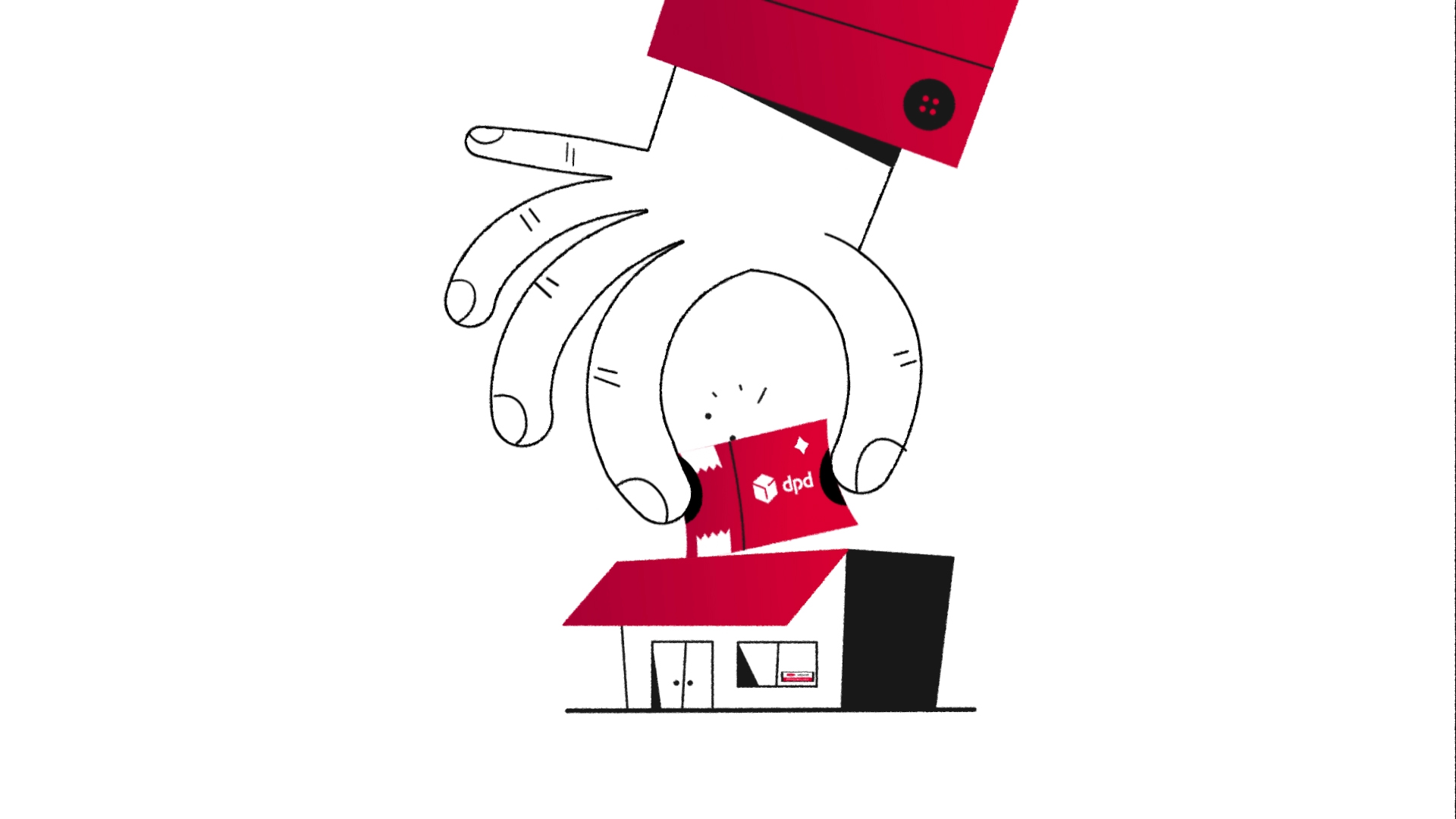
For our first project with DPD Polska, our task was to create a dynamic 2D animation promoting the DPD Pickup service. From the beginning, one of the most important premises was morphing. Individual motifs and shapes transitioned fluidly into one another, and the most important elements remained in the center of the screen. As a result, the information did not function like a set of separate slides. Each scene naturally followed from the previous one.
The style of the illustrations was also important. It had to remain consistent with DPD's identity while creating a unique character for animated communication. As a result, several rules were established that began to define how the brand moved in this project: central composition, fluid transformations, distinctive illustration, fast pacing, and continuity between messages.
At the time, these were design decisions needed to create a good film. However, their true value became apparent during the next project.
DPD Mobile - a new story, the same character
For our next project with DPD Polska, we promoted a different product: the DPD Mobile app. We could have treated this project as completely independent and designed everything from scratch. Instead, we decided to build upon the visual language developed for our previous animation. We reused fluid transitions and dynamic morphing, and maintained a similar illustration logic and approach to guiding the viewer's eye. The story changed. The messaging changed. The product changed. But the character of the motion remained.
As a result, the two pieces don't look like two random animations created for the same company. They are starting to form a series.
Consistency does not mean copying
This is an important distinction. Building a consistent motion language doesn't mean every subsequent campaign has to look identical. Quite the opposite. If the rules are well-defined, you can create very different materials that still belong to the same brand world. This is how classic visual identity works. A brand book doesn't say: every ad must have the exact same layout. Instead, it defines a set of rules that ensure many different layouts still look like one brand. The same can be true for motion.
We can maintain:
- the character of acceleration and deceleration
- the way of transitioning between scenes
- logo behavior
- the way typography is animated
- rhythm
- the character of transformations
- selected motion motifs
while creating a completely new story every time. The goal is not repetition. The goal is recognizability.
Why develop a language instead of starting from scratch?
The first benefit is obvious: brand consistency. But it's not the only one.
Subsequent projects start from a better position
You don't have to answer all the same questions about motion for every campaign. Some decisions have already been made and tested. The team knows what kind of animation character fits the brand.
It is easier to evaluate new ideas
When there is a set direction, it is easier to determine whether an idea aligns with our brand. This doesn't mean stifling creativity; it simply provides a point of reference.
The brand becomes more distinctive
If an audience regularly encounters a similar style of motion, it begins to build recognition just like other identity elements. The logo doesn't need to be present at all times for the communication to feel like it belongs to a specific brand.
Production can be more efficient
If we know how core elements should behave, some solutions can be reused or expanded upon. At scale, this can also mean ready-made components, presets, or templates. And this is exactly where a single motion language gradually evolves into a system.
From a few campaigns to a Motion Design System
If a brand produces one animation every few years, formalizing an entire system may not be necessary. The situation changes when motion starts appearing regularly: in advertising campaigns, social media, presentations, digital products, digital signage, DOOH, or internal communications. At that point, the number of people and teams working with the brand grows. Without established rules, every subsequent production may start interpreting motion in its own way. That is the moment to move from an intuitively developed language to a Motion Design System.
A system can define, among other things:
- motion character
- tempo and timing
- easing
- typography behavior
- transitions
- logo animation
- how to work with illustrations
- components
- templates
- use cases
It’s not about creating another document that no one ever uses. A good system should make creating new materials easier, not complicate the work of the teams.
A Motion Design System should not be developed in isolation from practice.
One way to build a system is to create principles from scratch. However, analyzing what a brand is already producing can also be a highly valuable resource. Which solutions have proven successful in past campaigns? Which elements are the most distinctive? What is worth keeping? What can be standardized? What should remain flexible?
That is why subsequent projects can gradually build a library of decisions, which later evolves into a conscious brand motion system.
When is it time to start thinking about your own motion language?
There is no magic number of animations after which a brand automatically needs a Motion Design System. However, it is worth considering when:
- you regularly produce animated campaigns
- multiple agencies or teams create content for your brand
- every animation looks a bit different
- motion is appearing across more and more channels
- adapting new materials requires constantly reinventing the wheel
- you want your brand to be recognizable through motion as well
A large system doesn't always have to be the first step. Sometimes it's enough to start with a few basic principles and develop them as you go with subsequent projects.
One campaign can be the beginning of something bigger
Our collaboration on two animations for DPD is a great example of how this process works in practice. The first project established a set of decisions regarding illustration, morphing, composition, and pacing. The second didn't just copy the previous film; it used its visual language to tell a new story. And that is the difference between creating a series of random animations and consciously developing a brand's communication in motion. The first animation can be a standalone project. Subsequent ones can start to build a language. And when that language becomes an important element of your communication, it's worth turning it into a system.